In collaboration with a colleague I developed a CX strategy and way-of-working for Pon Automotive.
Approach
Our starting point was the entire customer journey (online and offline). We have set up various metric systems for each journey step to measure user satisfaction, such as NPS and CES scores, conversion on KPIs and general feedback. Based on these indicators, we prioritised areas of attention, which we then investigated step-by-step. After the research phase we outlined solutions, formulated hypotheses for optimisation, created & validated prototypes and, if successful, supervised the implementation across multiple scrum teams.
Method
We worked in biweekly sprints, in which we spent one or more sprints per theme/problem area to investigate the problem and formulate the best (validated) solution. The exact working method of the team depended on the problem we were going to solve, but was usually a combination of design sprint methodologies, scrum elements and CRO techniques. We usually went through the following steps:
- Identify: before formulating the sprint challenge, we conducted preliminary research in order to identify the actual problem(s). This consisted of interviews with customers, customer service, dealers, input from feedback forms, data analysis on specific funnels and components and stakeholder input. Based on these insights, we identified the knowns, unknowns, hypotheses and the exact problems to solve.
- Research: Based on the missing insights and hypotheses, additional user research was conducted in order to answer the final questions. We also did competitor research (inside and outside the industry) and inspiration sessions.
- Define challenge & goals: the insights from the research phase were presented in lightning demos, and plotted on the customer journey. Based on these insights, we formulated a clear sprint challenge, goals and KPI’s.
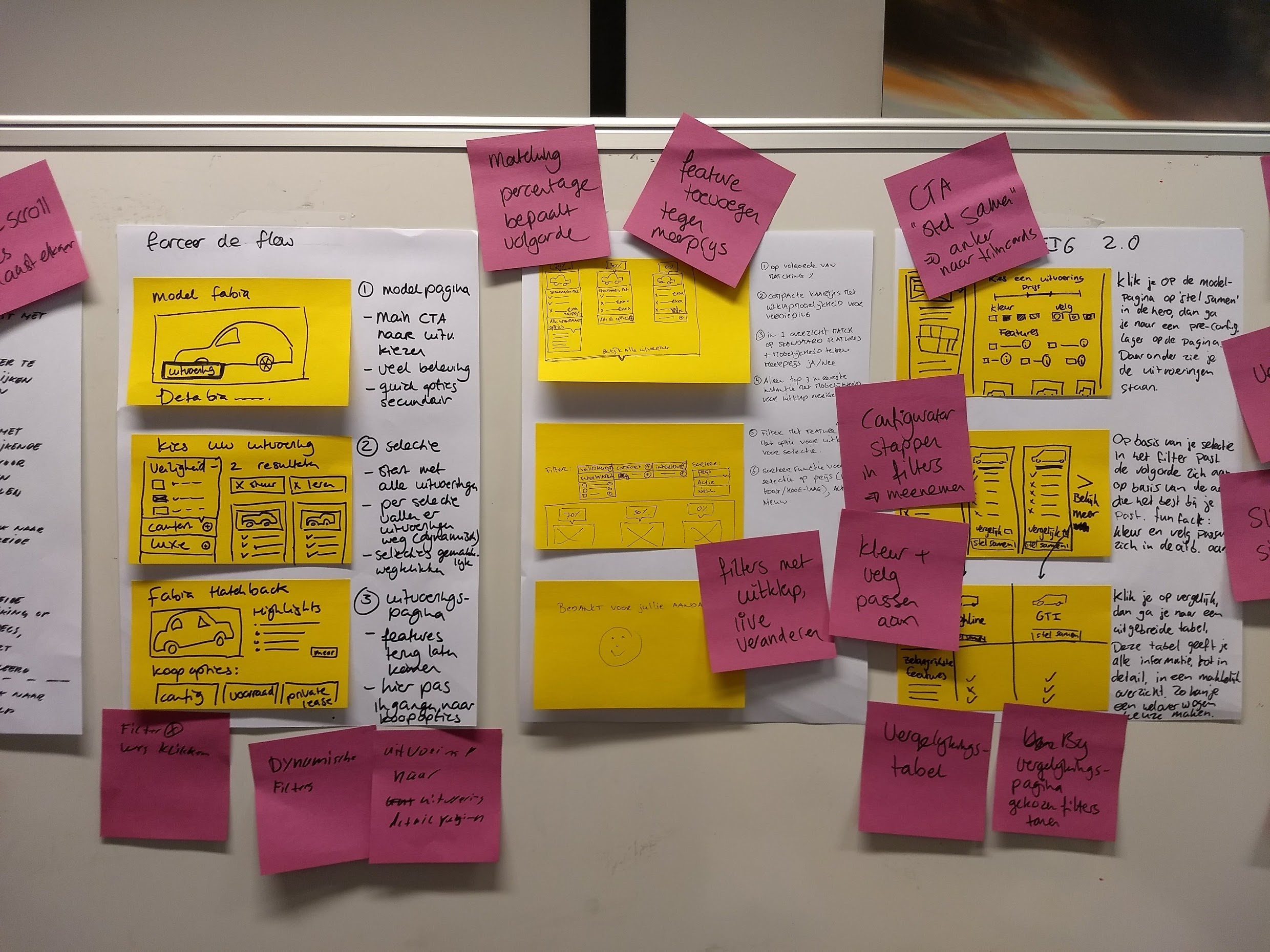
- Ideate: with a multidisciplinary team of designers, marketeers and stakeholders solutions we ideated solutions in a number of sessions and selected what to validate. The selected solutions and concepts were storyboarded and worked out.
- Prototype & validate: the solutions were converted into one or more testable prototypes. The test method depended on the prototype and type of solution, such as A/B tests, user interviews & observations, a low-fidelity frontend pilot, a content strategy, etc.
- Analyze & learn: the tests were plotted and recorded in a validation overview. As soon as a prototype has been positively validated, it was added to the product roadmap to be developed, distributed to the relevant teams (content & campaigns, development teams, etc).
Outcomes
Based on this way of working we have continuously improved journeys and products, on a large and small scale. Two of the projects I am most proud of:
- Improving the entire testdrive experience, from the appointment process to the actual dealer experience to aftercare. We combined improvements in product UI design (selection & appointment flow) with improved email, whatsapp & SMS flows, and inspired the dealers to create a personalised testdrive experience to make their customers feel welcome and personally cared for. Not only did this result in an increased conversion to appointment and a decrease in no-shows, we also inspired the dealers to come up with creative ideas to improve their own service.
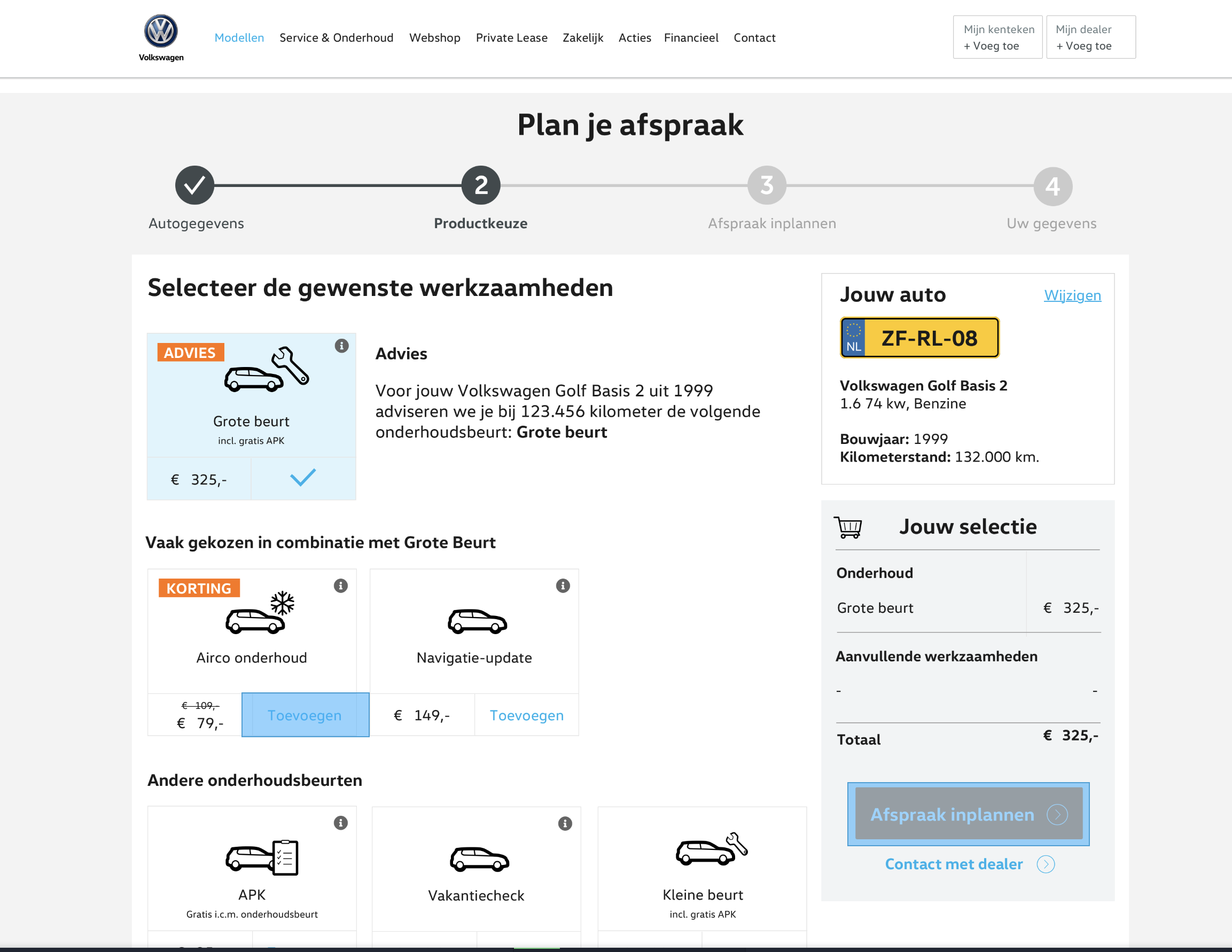
- Improving the service & maintenance flow, in order to help the customers to understand what the black box of car maintenance actually entails, to understand why specific repairs need to take place, and which repairs were actually necessary, versus the ‘nice-to-haves’. We combined UX/UI design of the maintenance selection flow with improvements of touchpoints and updates before and during the maintenance process. This resulted in improved customer satisfaction scores for the dealers, and a decrease in distrust between customer and dealer.
 Renske Jongbloed